
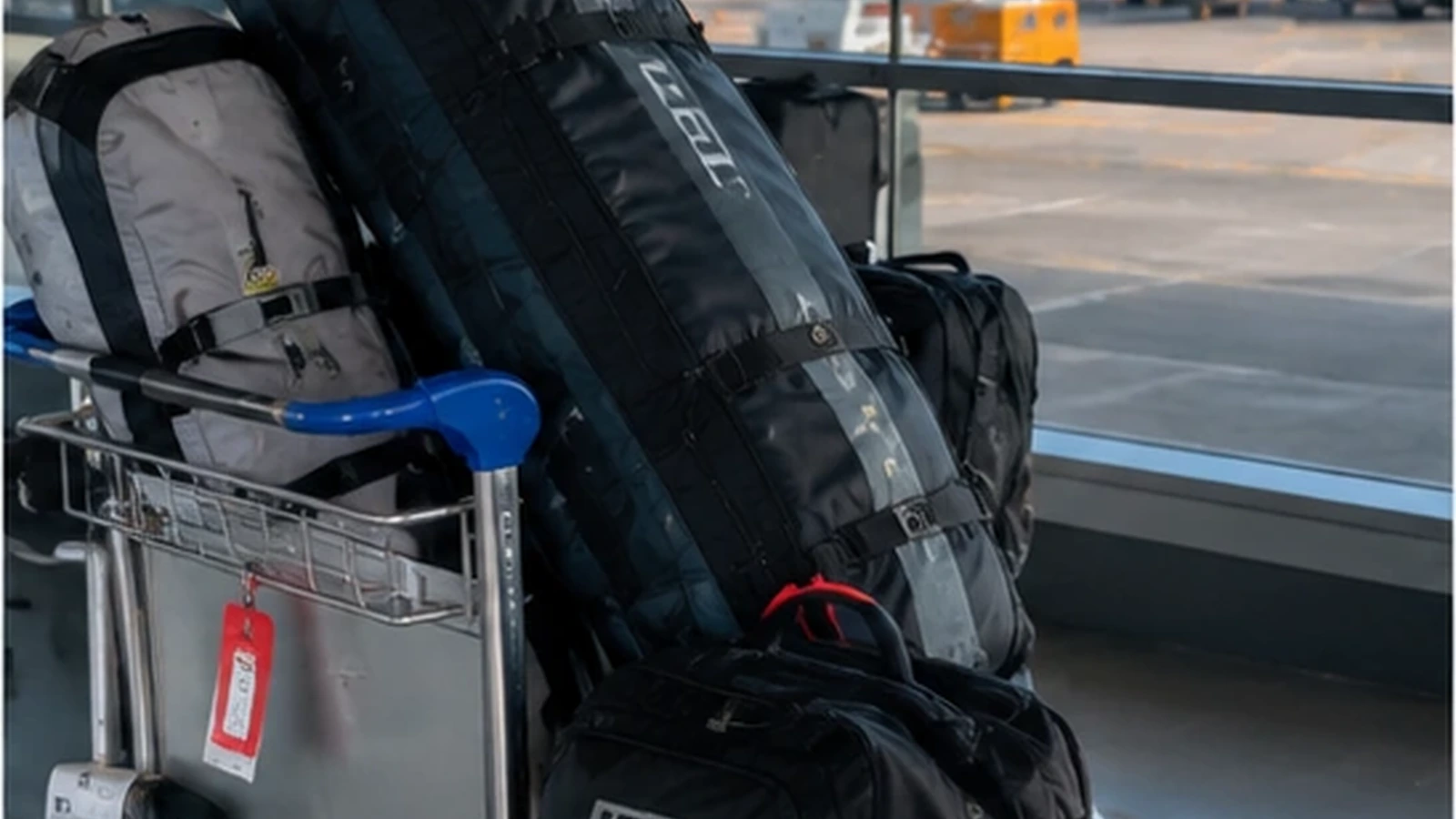
Every kite trip starts with the same spreadsheet moment: haul the coffin bag through two airports, or land light and rent? The answer is mostly arithmetic, and in 2026 the arithmetic is lopsided. Here are the real numbers for US carriers and typical rental spots, and the handful of cases where renting still makes sense.
The short version: own gear wins on cost after 1 to 2 days if you fly American, Delta, United or Alaska. Rent when the trip is short, kiting is a side thing, you fly a budget carrier, or you are still learning.
What a kite bag costs to fly
Round trip, US carriers, 2026 policies.
| Airline | How they treat a kite bag | Round-trip cost as your 2nd checked bag |
|---|---|---|
| American | Standard checked bag, no oversize fee under 115 linear inches | about $90-100 |
| Delta | Standard checked bag, no oversize fee under 115 linear inches | about $90-100 |
| United | Standard checked bag, no oversize fee under 115 linear inches; fees went up $10 in April 2026 | about $110-120 |
| Alaska | Standard checked bag, no oversize fee | about $90-100 |
| Southwest | Bag fees since 2025, no more free bags | about $70-100 |
| JetBlue | Fixed sports fee, about $100 each way | about $200 |
| Spirit, Frontier | Sports fee plus oversize plus overweight | $300-400 |
All of them enforce a 50 lb (23 kg) limit. From 51 to 70 lb you pay $100-200 extra each way. Over 70 lb the bag is refused.
What rental costs
Full set: kite, bar, board, harness.
| Spot | Per day | Per week |
|---|---|---|
| San Juan, Puerto Rico | $160 | ask |
| Cozumel, Mexico | $150 | ask |
| La Ventana, Mexico | about $105 | ask |
| El Gouna, Egypt | about $115 | about $480 |
Most schools want IKO level 3 or proof you can ride before they hand over gear.
The break-even
- Own gear, round trip on American, Delta, United or Alaska: about $100.
- Rental: $105-160 per day.
So own gear is cheaper from day one at most spots, and much cheaper over a week: $480-1,000 of rental against $100-120 to fly your own.
When renting still wins
- 1 or 2 days of kiting inside a non-kite trip.
- You fly Spirit, Frontier or JetBlue. The bag alone is $200-400.
- Tight connections or a regional jet on one leg. United Express and Delta Connection can refuse long bags.
- The spot needs sizes you do not own (Cape Town 7 m, Brazil 9 m, Baja 7-10 m). Check what your weight needs with the kite size calculator before you decide.
- You are a beginner. Schools do not rent to you anyway, and lessons include gear. Budget lessons instead; how much kitesurfing costs breaks that down.
When own gear wins
- 4 or more days of riding.
- You ride your own foil or surfboard. Rental foils are rare and about $150 per day.
- Two or more people travel together. One 50 lb bag carries 3 kites, 2 bars and 1 board.
Packing to stay under 50 lb
- Coffin bag, twin tip, 3 kites, 2 bars, harness, pump: about 45-48 lb. Weigh it at home.
- Wetsuit, leash, tools and clothes go in your carry-on or suitcase.
- A golf travel bag works too. Staff ask fewer questions.
- Screenshot the airline’s sports equipment page. Show it if the agent wants to charge a sports fee.
Not sure what belongs in the bag in the first place? The beginner kitesurf gear guide covers the full kit.
Bottom line
On the big four US carriers a kite bag is just a checked bag, so flying with your own gear pays for itself on the first day of riding and saves hundreds over a week. Renting earns its keep only on short side-trips, budget-carrier routes, beginner trips where lessons include gear, and spots that need sizes you do not own. Whatever you choose, weigh the bag at home and keep it under 50 lb (23 kg).
Sources: airline sports equipment pages, New Wave Kiteboarding airline guide (November 2025), school rental price lists, September 2026.